A cheap health insurance premium can become very expensive the moment you discover what the policy does not cover.
That is the tradeoff consumers need to understand with short term health insurance plans. These policies are primarily designed to bridge temporary gaps in coverage, such as the period between losing one health plan and gaining another. They can provide meaningful protection against certain unexpected medical expenses, but they are not simply stripped-down versions of ACA health insurance.
The differences can include medical underwriting, pre-existing condition exclusions, benefit limits and fewer required benefits. The details of the actual policy matter.
At Colorado PPO Plans, we help individuals, families and businesses compare the coverage that fits their needs instead of pushing everyone toward the same type of insurance. If you are facing a gap in coverage, get a quote and we can help you understand the options available to you.

What Are Short Term Health Insurance Plans?
Short-term, limited-duration insurance, commonly called short term health insurance, is primarily designed to fill a temporary gap between health plans.
A common example is someone leaving an employer before benefits from a new job begin. It can also be considered by someone who missed an enrollment opportunity and needs temporary protection while evaluating what comes next.
Short term coverage is not subject to all the federal individual-market requirements that apply to comprehensive ACA coverage. For example, federal rules do not guarantee short term policyholders the same protections concerning pre-existing conditions, health-status discrimination or annual and lifetime dollar limits on Essential Health Benefits.
That distinction should shape every decision you make about one of these policies. Do not ask only, “How much is the premium?” Ask, “What financial risk am I still carrying after I buy it?”
What Do Short Term Health Insurance Plans Cover?
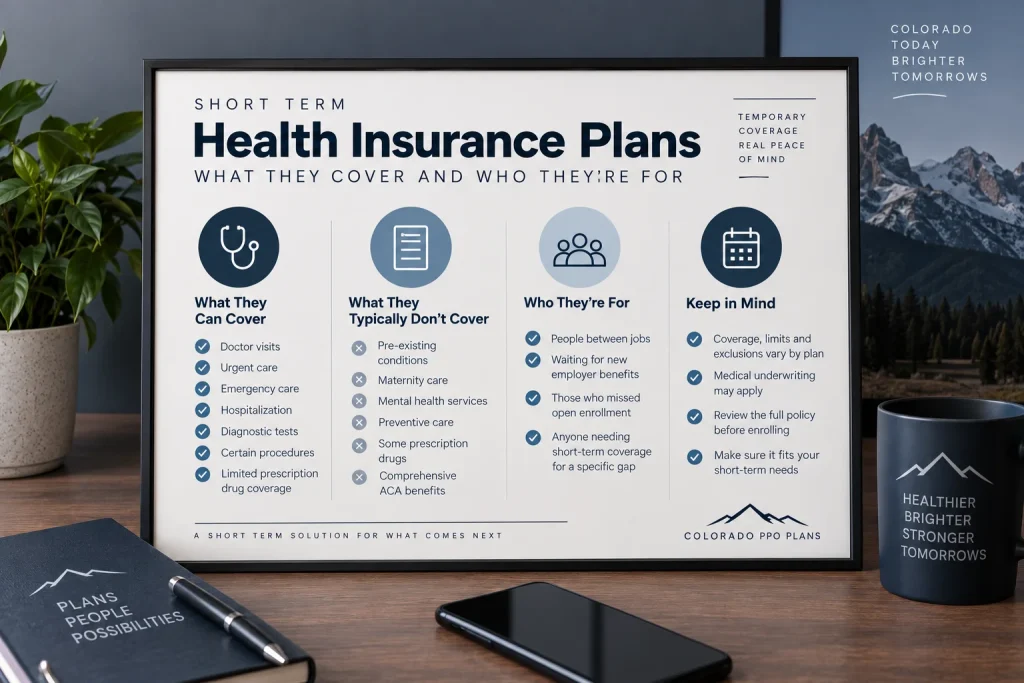
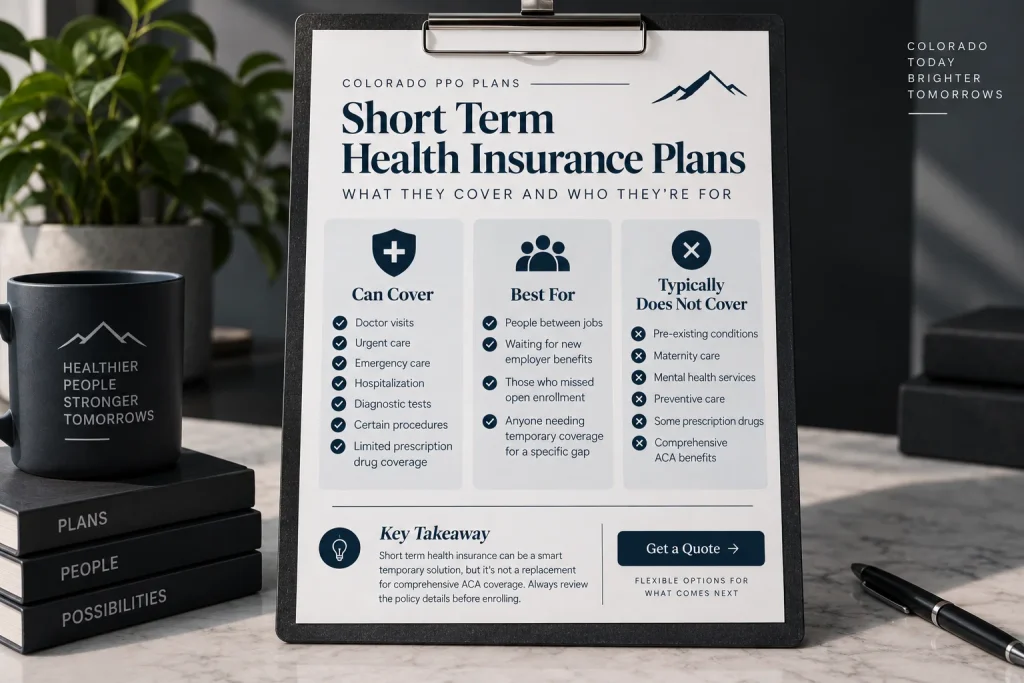
There is no universal benefit package for every short term health insurance plan. Depending on the policy, coverage can include eligible doctor visits, urgent care, emergency treatment, hospitalization, diagnostic testing and certain medical procedures.
The important phrase is “depending on the policy.”
Doctor Visits, Emergency Care and Hospitalization
Some policies cover physician visits or urgent care coverage for new illnesses and injuries. Emergency services and hospitalization may also be covered when the condition meets the policy’s requirements.
Coverage does not mean the insurer pays the entire bill. You may first need to satisfy a deductible, then pay coinsurance. The policy can also contain a maximum benefit.
For example, suppose a plan has a $5,000 deductible followed by 30% coinsurance. A covered $12,000 hospital bill would still leave you responsible for a significant amount. Looking at the $180 monthly premium alone would never reveal that exposure.
Diagnostic Tests, Procedures and Prescription Drug Coverage
Lab tests, imaging and medically necessary procedures may be covered when connected to an eligible illness or injury. Some plans can place separate restrictions or limits on specific services, so a broad statement such as “diagnostic care included” is not enough information.
Prescription benefits deserve the same scrutiny. A policy may provide limited prescription benefits, discounts or restrictions that differ substantially from comprehensive drug coverage.
If you take medication regularly, check the policy’s prescription provisions before applying. Never assume that a medication is covered because your previous insurance paid for it.
What Does Short Term Health Insurance Typically Not Cover?
This is where comparing policies becomes especially important.
ACA-compliant individual and small-group coverage must include Essential Health Benefits, including hospitalization, prescription drugs, maternity and newborn care, laboratory services, preventive care and mental health and substance use disorder services.
Short term coverage is not federally required to provide that same package.
Pre-Existing Conditions
Short term coverage may use medical underwriting and may exclude pre-existing conditions. ACA-compliant individual-market insurance cannot deny coverage because of a pre-existing health condition.
This can completely change the value of a policy.
Someone managing diabetes, for example, should not see “doctor visits covered” and assume visits, testing and medication connected with diabetes will automatically qualify. The policy’s definition of a pre-existing condition and its exclusion language need to be reviewed first.
Maternity, Mental Health and Preventive Care
Maternity care, mental health treatment, substance use disorder services and preventive care can be excluded or limited under short term policies.
That makes short term insurance a very different proposition for someone planning a pregnancy or receiving ongoing behavioral health treatment than for someone trying to cover a six-week gap between two comprehensive plans.
The lesson is simple: evaluate insurance around the care you could realistically need, not around the benefits highlighted most prominently in marketing materials.

Who Are Short Term Health Insurance Plans For?
Short term medical insurance works best when there is a clearly defined gap to solve and a clear plan for what coverage comes next.
People between jobs are an obvious example. Someone waiting for new employer benefits to take effect may also consider temporary coverage.
Adults turning 26 and leaving a parent’s plan can face a similar situation, although losing qualifying coverage may provide access to an ACA Special Enrollment Period. That option should be checked before assuming temporary insurance is necessary.
A Real-World Short Term Insurance Scenario
Consider Marcus, a healthy 43-year-old independent consultant. His spouse starts a new job in October, but family health benefits will not become effective until December 1. Their previous coverage ends October 31.
Marcus, his spouse and their child need to solve a one-month coverage gap.
They could compare available temporary coverage against other options rather than leaving the family uninsured. Before choosing a short term policy, they would need to check the deductible, hospital benefits, provider network, prescription provisions and exclusions. They would also want December 1 confirmed as the effective date of their next comprehensive plan.
Now change one detail. Suppose Marcus’s spouse is receiving ongoing treatment for a pre-existing condition. Suddenly the lowest-priced temporary policy may be a poor fit because treatment associated with that condition could be excluded.
That is why the right plan depends on the person, not just the length of the gap.
People who work for themselves may also have more choices than they realize. Our self-employed health insurance options can help you compare alternatives before treating temporary insurance as your default.
How Much Does Short Term Health Insurance Cost?
The monthly premium is only the first number to examine.
Your age, location, insurer, plan design and underwriting can affect cost. More importantly, two plans with similar premiums can expose you to very different medical expenses.
Health Insurance Premiums, Deductibles and Out-of-Pocket Costs
Start with four numbers: premium, deductible, coinsurance and maximum benefit.
The premium keeps the policy active. The deductible is generally the amount you must pay toward applicable covered services before certain benefits begin. Coinsurance is the percentage of eligible costs you may owe after satisfying the deductible.
Then check the maximum benefit. Short term coverage can have dollar limits that ACA-compliant plans cannot impose on Essential Health Benefits in the same way.
A $150 monthly plan with a large deductible, substantial coinsurance and restrictive benefits could leave you carrying considerably more risk than a $400 plan with broader coverage. Compare what happens during a bad medical month, not just a healthy one.

Short Term Health Insurance vs. ACA Health Insurance
Short term insurance primarily solves temporary coverage problems. ACA-compliant coverage is designed to provide comprehensive individual health insurance with specific federal consumer protections.
One of the biggest differences involves pre-existing conditions. ACA individual-market plans cannot deny you coverage or charge you a higher premium because of your health status. Short term policies do not have the same federal protection.
ACA plans also cover the Essential Health Benefits required for applicable individual and small-group plans. Short term coverage does not have to match that benefit structure.
Financial assistance can further change the comparison. Eligible Marketplace shoppers may qualify for premium tax credits, so comparing the sticker price of an ACA plan against a short term premium can produce a misleading conclusion.
Provider Networks and PPO Health Insurance
A policy’s network can matter just as much as its deductible.
Check your doctors, hospitals and specialists against the exact plan network before enrolling. A carrier name alone is not enough because one insurer can operate multiple networks.
There is another important issue that is easy to miss: services covered by short-term, limited-duration plans are not subject to the federal No Surprises Act billing protections in the same way as qualifying comprehensive health plans. That can increase your exposure to certain unexpected out-of-network bills.
If provider flexibility is a priority, review the PPO plans available to you. We can also help evaluate available carrier options, including Aetna PPO Plans, based on the network and coverage you actually need.
When ACA Coverage or COBRA May Make More Sense
ACA coverage deserves serious consideration if you have pre-existing conditions, expect significant medical care or need comprehensive benefits.
COBRA can also be valuable after leaving an employer because it can allow eligible individuals to continue the same group coverage. It may cost more because the former employee can become responsible for most or all of the premium, but maintaining the same doctors, network and benefits can be valuable during ongoing treatment.
Do not compare these options on premium alone. Compare continuity of care, expected medical spending and the protection each policy provides if something expensive happens.
How Long Can You Keep Short Term Health Insurance?
This is one area where old online advice can be especially unreliable.
Federal regulations adopted in 2024 defined newly issued short-term, limited-duration insurance as having an initial term of no more than three months and a maximum coverage period of four months when renewals and extensions are included.
However, federal policy shifted again in August 2025. The Departments of Labor, Health and Human Services and Treasury announced that they would not prioritize enforcement of violations related to the 2024 STLDI definition while considering further rulemaking.
State law adds another layer. States can impose their own definitions and restrictions, so the short term health insurance plans available in one state may not match those offered elsewhere.
Always verify the rules and products available when you apply rather than relying on an article written under an older regulatory framework.

What to Check Before Choosing a Short Term Health Insurance Plan
Before enrolling, pull up the actual policy documents and answer these questions:
- Are my preferred doctors, hospitals and specialists in the provider network?
- How does the policy define a pre-existing condition?
- Which prescriptions are covered?
- What is my deductible?
- What coinsurance applies after the deductible?
- Are there service-specific limits?
- What are the benefit maximums?
- Which major categories of care are excluded?
- How is out-of-network care handled?
- When does the policy end?
- What insurance will replace it?
The final question is especially important. Losing short term coverage does not necessarily create the same ACA Special Enrollment Period opportunity as losing qualifying comprehensive coverage. Temporary insurance works much better when you already know how and when you expect to transition out of it.
Are Short Term Health Insurance Plans Worth It?
Short term health insurance plans can make sense when you have a genuine temporary gap, understand the exclusions and have a clear path to your next source of coverage.
They are much less attractive when the care you expect to need falls outside the policy or when you actually need comprehensive long-term insurance.
For business owners evaluating coverage for employees, temporary individual plans are not a substitute for a proper benefits strategy. Our small business health insurance options provide a better place to start that comparison.

Find the Right Health Insurance Plan for Your Coverage Needs
We are based in Colorado and help individuals, families and businesses compare ACA coverage, private insurance and PPO options based on their actual needs. We look at your budget, medical needs, preferred providers and coverage timeline before helping you evaluate the available choices.
If you are trying to bridge a coverage gap or simply want to know what your alternatives are, contact us at Colorado PPO Plans and we will help you compare them.